Walther P38
Updated: 2 days ago

UPDATE: I took this P38 to the range to test fire. See added paragraph and video below.
I actually worked on this Walther P38 a few weeks ago, just now taking the time to write about it. It turns out this particular P38 was not made by Walther - more on this in the paragraphs below. The client wanted me to inspect this P38 and make it safe to fire, as it has been a safe queen for many years. I did a deep clean and inspection; it looked really good for its age.
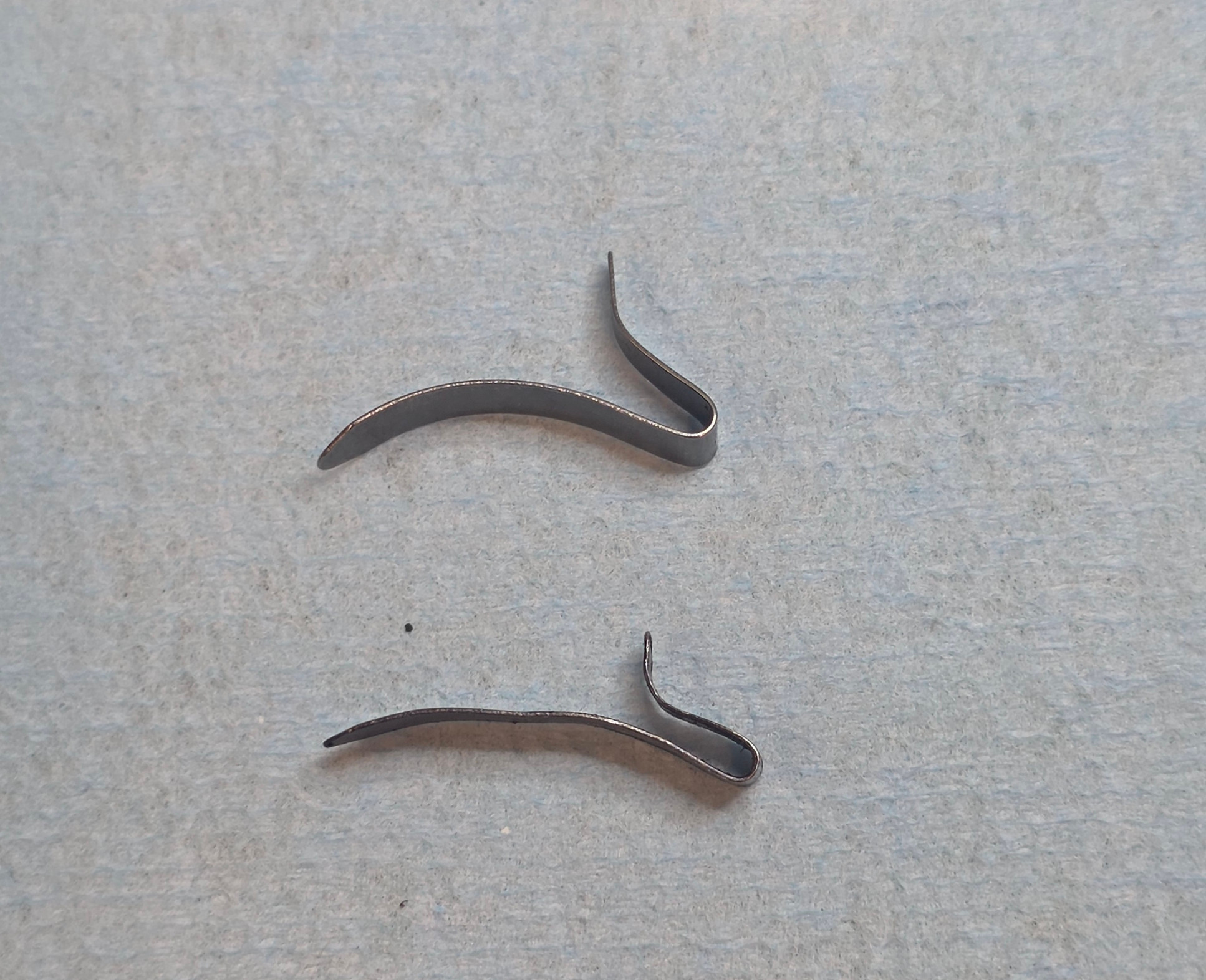
I found that the locking block spring had been abused at some point. I tried to bend it back into shape, but it was just too far gone. Luckily I found a new replacement, ordered the part and got it installed and fit. The locking block itself was hanging up on the frame just a bit when operating and also when taking the gun down. A little bit of fitting and deburring and now it works very smoothly.
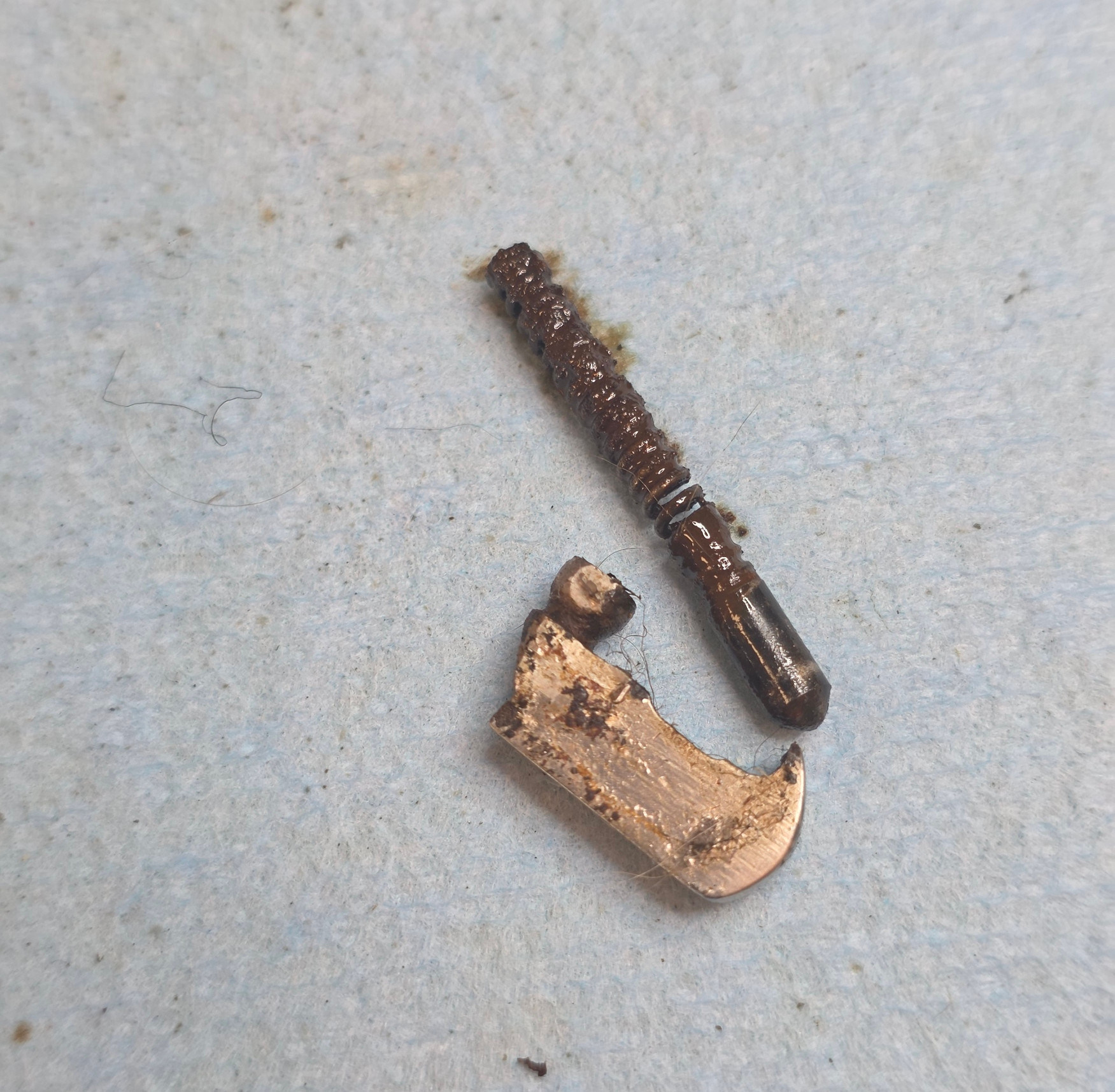
The extractor, spring, and plunger did not move at all. I kept working in penetrating oil and wiggling the extractor as much as I could until finally the plunger moved enough to get the extractor out. Once the extractor was out I was able to work directly on the plunger and spring. Eventually the plunger popped out and I was able to dig out the spring. As expected, lots of gunk and corrosion on all of these parts. They looked good once cleaned, so I did not have to replace or fit them. The chrome on the extractor is flaking off a bit, but only in areas where it cannot be seen.

The staked pin on the right side of the frame that holds the trigger bar/disconnector spring fell out on its own accord. I was able to clean it up, degrease, and stake it back in place with a bit of red Loctite. I did not have the right staking tool, so had to modify one I had. It is solidly back in place now.
The rest of the work on this handgun was a standard deep clean and inspect. I do like the way these P38s are designed with the removable slide cover. Once the cover is off you can see pretty much all of the components in the slide and verify proper operation and cleanliness. Here are some photos of the gun in-work. (BTW, I have not figured out how to add captions to photos in a gallery like those below. If you know how to do so, please contact me!)
Extractor spring out, firing pin protrusion, and headspace measurements are all well within spec. I have not test fired it yet, I will post videos when I do.
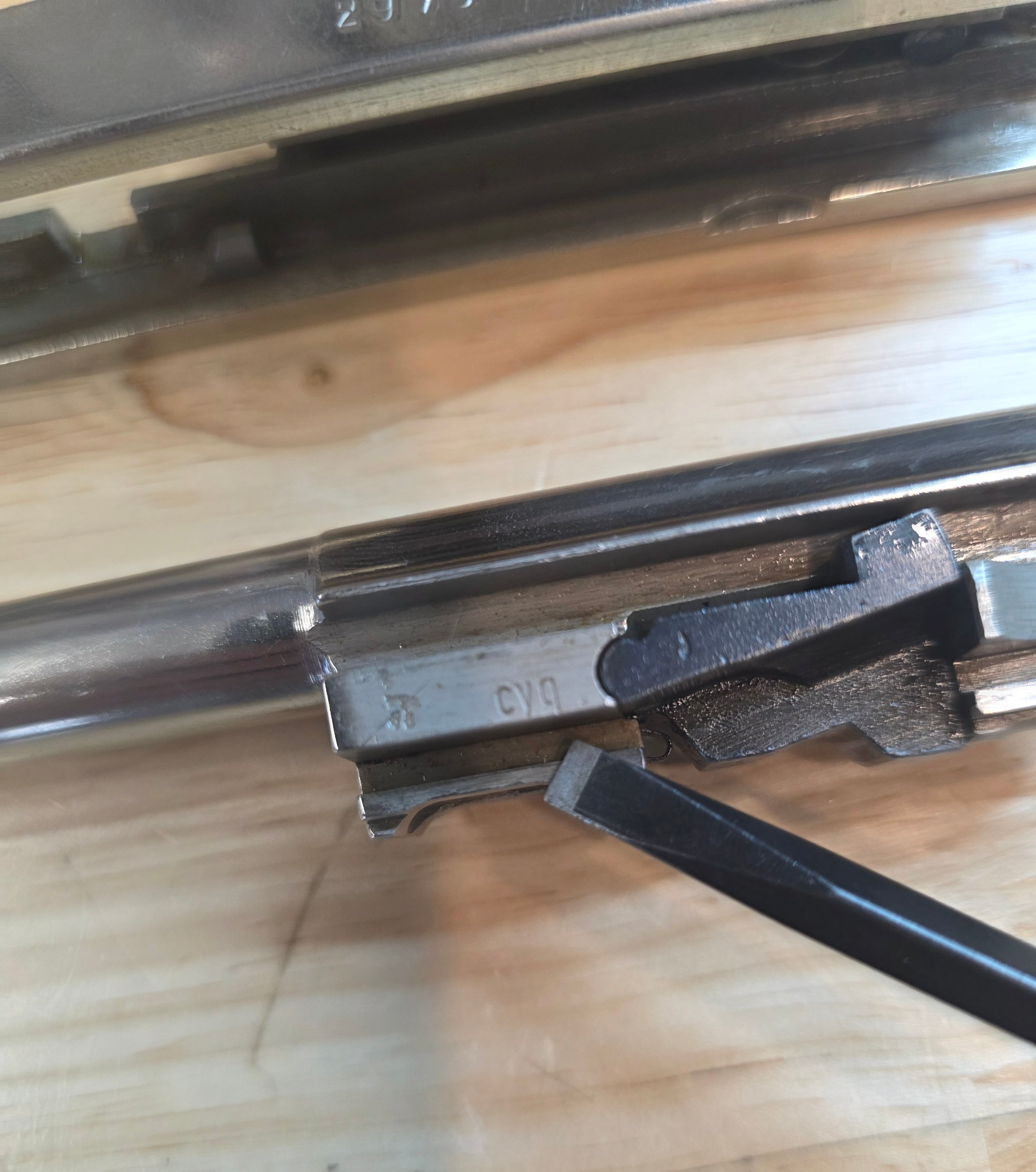
A bit of history on this gun. The chrome is not stock, it was added sometime in its life. Unfortunately the chrome covers many of the original markings which made it hard to research it's history. I did find the manufacturing and proof stamps, that, when combined with the visible serial number, leads to the conclusion that this gun was manufactured by Spreewerk in Czechoslovakia in May of 1944. By the date I assume it was issued into the German army in late WWII, but have absolutely no proof of that. I do not know how it found its way into the US. And yes, I did find some of the expected German WWII markings on internal parts. The slide and frame may have had them, but the chrome is obscuring them now if they are there.
Should this piece be in a museum? Maybe. There appears to be quite a few P38's 'out in the wild' being used today that are not in museums, so perhaps these are not as rare as one would think. I do not think it is a very collectable or museum worthy, especially with the added chrome. The chrome makes it kinda unique, but it has, IMHO, greatly devalued this handgun as a historical artifact. I would love to hear from historians and collectors who have knowledge of these handguns.
UPDATE 29 Sept: I took this gun to the range to test fire it. As usual, I started by loading one round in the magazine. All went well with this shot.
My next set was five rounds loaded in the magazine. The first four fired just fine, the fifth jammed with the cartridge partially in the chamber. I cleared the jam and inspected the cartridge for irregularities and found none. Loaded it as a single and it shot just fine. I loaded five again, and got the exact same result and jam on the fifth round.
The jam seemed like a magazine fault. I tore down the magazine and inspected it. All looked fine. While apart I did a bit of tweaking on the magazine spring, then loaded five again. All five fired fine, and the slide locked back when empty as expected. Repeated a series of five shots again, and all went as expected. A simple tweak fixed it.
This Walther (Spreewerk) P38 is ready to go back to its owner. It is a fun gun to shoot, seems to be very precise, and has the added bonus of having a bit of history behind it. It was an absolute pleasure to make it work again!


Comments